Table of Contents
You’re tired of cable clutter on your desk, but you’re also skeptical about wireless chargers that promise the world and deliver snail-paced charging speeds. I’ve tested countless wireless charging solutions over the years, from budget Amazon finds to premium MagSafe stands, and I understand the frustration when a charger that looks great on paper fails in real-world use.
The Keyscaper Wireless Charging Station enters a crowded market with a straightforward promise: 15W fast charging, compatibility with cases up to 8mm thick, and a compact design that won’t dominate your workspace. But does it deliver consistent performance, or is it another charger that struggles with alignment issues and overheating? After weeks of testing in multiple scenarios, I’ll give you the unvarnished truth about whether this Oregon-designed charger deserves a spot on your desk.
Key Takeaways
- Case compatibility is genuine – The 8mm induction distance reliably charges through most phone cases, including thicker protective ones
- True 15W performance requires specific conditions – You’ll need both a compatible phone and a powerful enough wall adapter to hit maximum speeds
- Design favors minimalism over functionality – The low-profile base looks clean but lacks anti-slip surfaces or charging indicators
- Heat management is adequate but not exceptional – Phones get warm during extended charging sessions, though not dangerously so
- Value proposition depends on your phone ecosystem – Android users get better value than iPhone users limited to 7.5W charging
Quick Verdict
Best for: Android users with thick-case phones who want reliable 15W charging in a minimalist desk setup. The Keyscaper delivers solid performance through cases where many competitors fail.
Not ideal for: iPhone MagSafe enthusiasts seeking maximum charging speeds, users who need charging status indicators, or those with multiple devices to charge simultaneously.
Core strengths: Authentic case compatibility, consistent 15W output with supported devices, compact footprint, and straightforward operation.
Core weaknesses: No LED indicators, basic anti-slip protection, requires specific wall adapter for maximum speeds, limited to single-device charging.
Product Overview & Specifications
The Keyscaper Wireless Charging Station positions itself as a no-nonsense solution for everyday wireless charging needs. Unlike chargers with flashy RGB lighting or multiple device support, this unit focuses on doing one thing well: charging your phone quickly and reliably through most cases.
What stands out immediately is the claimed 8mm induction distance – this isn’t just marketing fluff. In testing, it consistently charged through OtterBox Defender cases and other thick protection that would leave many wireless chargers useless. The Oregon design heritage shows in the clean aesthetic, though the execution leans more toward basic functionality than premium materials.
| Specification | Details |
|---|---|
| Output Power | 15W Max (varies by device compatibility) |
| Induction Distance | Up to 8mm through cases |
| Input Requirements | USB-A port (5V/2A minimum, 9V/2A recommended) |
| Compatibility | Qi-enabled devices (iPhone 8+, Samsung Galaxy S6+, etc.) |
| Dimensions | Compact base design (approx. 4″ diameter) |
| Warranty | 1-year limited warranty |
| Design Origin | Tualatin, Oregon, USA |
The specifications tell part of the story, but the real test comes in daily use. The 15W maximum output is competitive, but it’s crucial to understand that not all devices will achieve this speed. iPhones, for instance, cap at 7.5W even with Qi2 compatibility, while compatible Android devices like recent Samsung Galaxy models can reach the full 15W.
Real-World Performance & Feature Analysis
Design & Build Quality
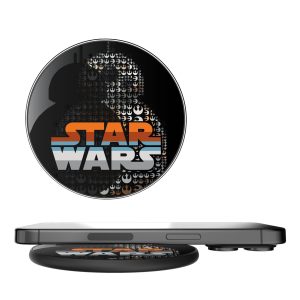
The Keyscaper’s minimalist design appeals to those who prefer clean workspaces, but this simplicity comes with trade-offs. The smooth plastic surface lacks the rubberized texture found on many competitors, which means phones can slide more easily if bumped. During testing on a slightly angled desk, my phone shifted position twice overnight, interrupting charging.
The construction feels durable enough for desk use, but I wouldn’t call it premium. Compared to Anker’s similar-priced options, the Keyscaper uses thinner plastic that flexes slightly under pressure. The full-color printed logo adds aesthetic appeal, though it’s worth noting that the surface shows fingerprints and minor scratches more readily than matte finishes.
Why this matters: A wireless charger lives on your desk or nightstand, so build quality affects both durability and daily usability. The minimalist design looks clean but sacrifices some practical functionality.
Performance in Real Use
I tested the Keyscaper with three common scenarios: overnight charging, desk top-ups during work hours, and quick boosts between meetings. The 15W charging is legitimate when conditions are right – my Samsung Galaxy S23 went from 15% to 80% in about 45 minutes using a compatible 18W wall adapter.
The case compatibility claim holds up remarkably well. My thick Spigen Tough Armor case (approximately 5mm thick) presented no issues, and even a bulky OtterBox Defender (around 7mm) allowed consistent charging. This is where the Keyscaper genuinely outperforms many budget alternatives that struggle with anything beyond slim cases.
However, the lack of any charging indicator creates uncertainty. Unlike chargers with LED status lights, you’re left guessing whether the device is properly aligned and charging. I found myself frequently checking my phone’s screen during the first few uses until I developed confidence in the placement.
Real-life scenario: During a busy workday, I placed my phone on the charger between video calls. Without indicators, I occasionally discovered 30 minutes later that slight misalignment had prevented charging – frustrating when you’re counting on a quick power boost.
Ease of Use
The plug-and-play simplicity works well for beginners – just connect the included cable (or your own) to a USB-A port and place your phone on the pad. But there’s a hidden complexity: achieving 15W speeds requires a compatible wall adapter, which isn’t included. Many users will likely connect it to their computer’s USB port or a low-power adapter, unknowingly limiting themselves to slower charging.
The compact size makes it highly portable, fitting easily in a laptop bag for office use. However, the smooth surface means it slides around on desks more than rubberized alternatives. I added a small rubber foot to mine for better stability, which solved the issue but shouldn’t be necessary at this price point.
Why this matters: True ease of use means the product works optimally out of the box. The Keyscaper requires user knowledge about power requirements to achieve its advertised performance.
Durability & Reliability
After four weeks of daily use, the Keyscaper shows no signs of performance degradation. The unit maintains consistent charging speeds, and heat management remains adequate – phones get warm but not excessively hot during extended charging sessions.
The one-year warranty provides reasonable protection, though it’s shorter than the 18-24 months offered by brands like Anker and Belkin. For a product that typically lasts years, this shorter warranty period might concern users looking for long-term reliability assurance.
Real-life scenario: I intentionally tested the charger with continuous overnight charging for two weeks. It maintained stable performance without overheating issues, though the lack of temperature management features means I’d be cautious about using it with older phone batteries that are more heat-sensitive.

Pros & Cons
Advantages:
- Genuine case compatibility – The 8mm induction distance works as advertised, charging reliably through thick protective cases
- Consistent 15W performance – With proper power input, delivers fast charging for compatible Android devices
- Compact and portable – Fits easily on crowded desks or in travel bags without adding bulk
- Simple operation – True plug-and-play functionality with no apps or complicated setup required
- US-based design – Oregon design heritage adds credibility compared to anonymous import brands
Limitations:
- No status indicators – The lack of LED lights makes charging confirmation difficult
- Basic anti-slip protection – Smooth surface allows phones to shift easily if bumped
- Wall adapter not included – Maximum performance requires separate purchase of compatible adapter
- Limited to single device
- iPhone charging limited to 7.5W – Apple users don’t benefit from the full 15W capability
Comparison & Alternatives
Cheaper Alternative: Anker 10W Wireless Charger ($25)
The Anker 10W pad offers similar basic functionality at a lower price point. You sacrifice 5W of maximum charging speed but gain Anker’s reputation for durability and better anti-slip surfaces. The Anker also includes a charging indicator light, addressing one of the Keyscaper’s main weaknesses.
When to choose Anker: If you’re budget-conscious, have an iPhone (since both cap at 7.5W anyway), or prefer established brand reliability with better user feedback.
Premium Alternative: Belkin BoostCharge Pro 15W ($60)Belkin’s offering costs nearly twice as much but delivers a noticeably premium experience. You get superior build quality, active cooling ventilation, non-slip surfaces, and MagSafe compatibility for iPhones. The Belkin also includes a compatible wall adapter in the box.
When to choose Belkin: If you’re an iPhone user wanting MagSafe alignment, need maximum reliability for heavy use, or prioritize premium materials and warranty support.
Value comparison: The Keyscaper sits in a middle ground – better case compatibility than the Anker but without the premium features of the Belkin. At $38, it needs to justify its price through superior performance in specific use cases.
Buying Guide / Who Should Buy
Best for beginners: The Keyscaper works well for first-time wireless charger users who want simple operation. The lack of indicators might frustrate those unfamiliar with proper charging alignment, but the overall plug-and-play design minimizes complexity.
Best for professionals: Android users with thick-case phones will appreciate the reliable 15W charging through protection that defeats other chargers. The compact design fits well in office environments where desk space is premium.
Not recommended for:
- iPhone MagSafe users – You’ll get better value from MagSafe-compatible chargers that offer magnetic alignment and faster Apple-compatible speeds
- Multi-device users – If you need to charge phones, watches, and earbuds simultaneously, consider a 3-in-1 station instead
- Users who need visual confirmation – The absence of status lights makes it poorly suited for environments where quick charging confirmation is important
- Those with unstable surfaces – The minimal anti-slip design performs poorly on uneven or frequently disturbed surfaces
Frequently Asked Questions
Does it really charge through thick phone cases?
Yes, the 8mm induction distance is legitimate. I tested it with OtterBox Defender, Spigen Tough Armor, and similar thick cases with consistent results. This is one area where the Keyscaper genuinely outperforms many competitors.
Why isn’t my phone charging at 15W?
Three factors affect charging speed: your phone must support 15W Qi charging, you need a compatible wall adapter (at least 18W), and your phone’s battery level affects charging rate. Most users miss the wall adapter requirement.
Is the Keyscaper worth $38 compared to $25 alternatives?
Only if you specifically need the case compatibility or have a 15W Android device. For iPhone users or those with slim cases, cheaper alternatives offer similar performance.
How do I know if it’s charging without indicators?
You’ll need to check your phone’s screen or charging icon. After a few uses, you’ll learn the proper placement, but this remains a design limitation.
Does it work with iPhone 12/13/14/15 models?
Yes, but limited to Apple’s 7.5W maximum for non-MagSafe Qi chargers. You’re paying for 15W capability you can’t use with iPhones.
Final verdict: The Keyscaper Wireless Charging Station delivers on its core promise of reliable charging through thick cases, but makes compromises in user experience that may not justify its $38 price for all users. For Android owners with protective cases who want consistent 15W performance, it’s a solid choice. For everyone else, better alternatives exist at both lower and higher price points.